DBD day: when silence doesn’t always mean no
If you work in admissions, you don’t need DBD day explained.
You’ve assessed the applications. Sent the offers. Answered the questions. Run the events. Reassured the nervous applicants.
Then the reply deadline passes and a chunk of your offer-holders quietly slip into Declined by Default.
Not exactly the result anyone was hoping for.
Except, of course, it’s not always quite that simple.
Some applicants will have made a clear decision. They’ve chosen somewhere else, changed their plans or decided it’s not for them. But others? They might have missed the deadline. Got overwhelmed. Misunderstood what they needed to do. Put it off for one more day (and then suddenly there wasn’t one more day.)
So while DBD looks like a “no” in the system, it might actually mean:
“I forgot.”
“I wasn’t sure.”
“I didn’t know who to ask.”
“I still need help.”
And that’s why what happens next really matters.
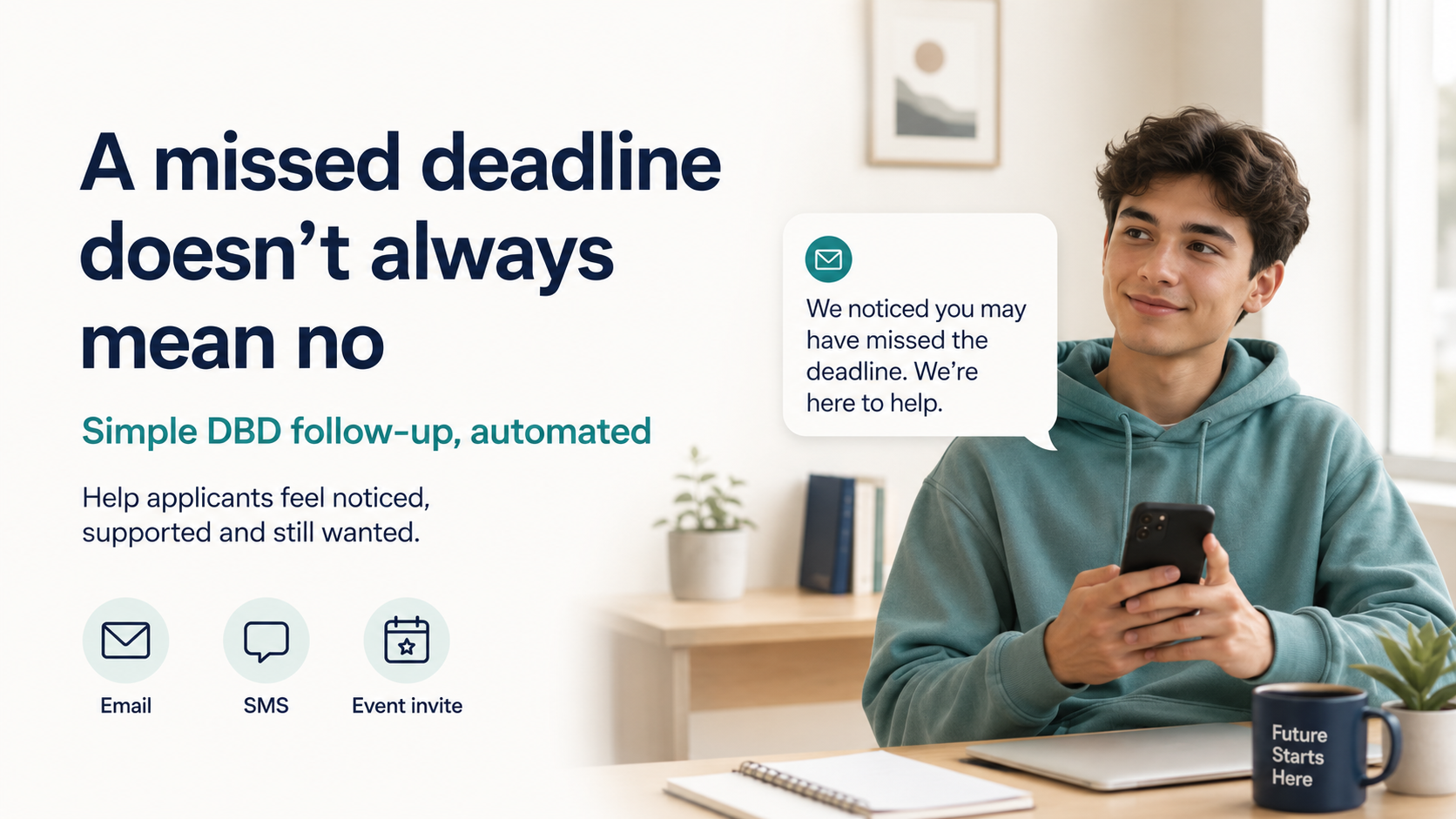
Make the next step obvious
The tricky bit with DBD applicants is that they don’t all need the same thing.
Some need:
-a quick reminder that there may still be options.
-a conversation with admissions.
-reassurance from the course team.
-to be invited back in, whether that’s to a webinar, an online drop-in or something on campus.
And some are done, but that’s useful to know too.
The important thing is that the next step is clear, both for the applicant and for your team.
Because once an applicant has gone DBD, speed matters. Not in a frantic, “drop everything” kind of way - just a confident “let’s make sure they hear from the right person”.
It also needs to feel human.
Belonging plays a massive part in decision-making. So if an applicant has gone DBD, for any one of the many reasons that can happen, the follow-up should still make them feel wanted.
Not chased. Not pressured. Wanted. Supported.
A message that says: we noticed, we understand this happens, and there’s still someone here if you want to talk.
With Student CRM, you can build that follow-up really simply in advance. A text. An email. A call. An event invite. A note for the right team. All triggered automatically from the applicant’s status change, without someone having to manually hold the whole thing together.
That means the applicant gets a timely, helpful response, and your team gets a much clearer view of who’s been contacted, who’s replied, and who still needs a nudge.
If this DBD felt stressful, there’s time to make the next one smoother
The first DBD date may have passed, but it isn’t the only one. There’s another undergraduate DBD point in June, and another in July, so if this one felt more rushed, manual or unplanned than you’d have liked, now’s a good moment to tighten things up.
Maybe it was hard to see who needed what, with lists being pulled together quickly, or calls, emails and event invites happening in different places. Did the right teams have the full picture soon enough to be able to do what was needed? Maybe the follow-up did happen, but took far more manual effort than it needed to.
That’s useful to know now, while there’s still time to improve.
DBD doesn’t always mean the conversation is over. Sometimes it just means the applicant needed one more clear, human, well-timed message. And next time, that message can already be ready to go.
Get in touch
Want to get your DBD follow-up sorted before the next UCAS deadline?
Talk to us about setting up automated emails, SMS, call lists, event invites and applicant follow-up journeys in Student CRM.